+86-13777321650


 русский
  Español

Scalloped Cushion Deco Pillow: Soft Microfiber Comfort with Refined Decorative Detail
Content
- 1 Product Overview
- 2 Key Product Specifications
- 3 The Design Appeal of a Scalloped Edge
- 4 Microfiber Comfort and Practical Performance
- 5 Why the 45cm x 45cm Size Works So Well
- 6 The Invisible Zipper Advantage
- 7 Advantages Over Common Competitor Cushions
- 8 How the Cushion Supports Modern Interior Trends
- 9 Styling Applications for Beds, Sofas, and Lounges
- 10 Manufacturing Strengths Behind the Product
- 11 Design and Development Process
- 12 Raw Material Inspection
- 13 Precision Cutting for a Consistent Scalloped Shape
- 14 Sewing and Edge Finishing
- 15 Filling Control and Shape Management
- 16 Quality Inspection and Final Packaging
- 17 Certification, Safety, and Responsible Practice
- 18 Why Professional Export Experience Matters
- 19 Commercial Value for Retailers and Importers
- 20 Consumer Experience After Purchase
- 21 Care and Maintenance Considerations
- 22 Integration with Broader Home Textile Collections
- 23 Quality as a Long-Term Competitive Strategy
- 24 Q&A Section
- 24.1 What makes the Scalloped Cushion Deco Pillow different from a standard cushion?
- 24.2 Is the cushion suitable for both beds and sofas?
- 24.3 Why is microfiber used for this decorative cushion?
- 24.4 What is the benefit of an invisible zipper?
- 24.5 How does the scalloped edge improve interior styling?
- 24.6 Why is manufacturing control important for this product?
- 24.7 Can this cushion be part of a larger home textile collection?
- 24.8 What kind of buyers can benefit from this product?
- 24.9 Does the company have experience in home textile exports?
- 24.10 What quality values support the product?
- 25 Conclusion
- 26 References
A cushion may appear to be a small home textile item, yet it can influence the mood, comfort, and visual harmony of an entire room. The Scalloped Cushion Deco Pillow is designed for exactly that purpose: to add a polished decorative accent while remaining practical, soft, and easy to style. Measuring 45cm x 45cm, crafted from comfortable microfiber, finished with a charming scalloped edge, and completed with an invisible zipper, this filled cushion brings together design detail and everyday usability.
In modern interiors, consumers increasingly look for home textile products that are not only attractive but also durable, versatile, and responsibly produced. A decorative cushion must withstand daily contact, repeated styling, and seasonal room updates. It should look elegant on a sofa, inviting on a bed, and refined in a lounge setting. The Scalloped Cushion Deco Pillow answers those needs through a balanced combination of material selection, finishing technique, product proportion, and quality-focused manufacturing.
This article explores the product’s design value, comfort advantages, styling flexibility, manufacturing processes, and competitive strengths. It also explains how a professional bedding and home textile export company with experience in duvet covers, comforters, quilts, bedcovers, curtains, cushions, throws, and blankets can deliver consistent quality for international buyers. From raw material inspection to final packaging, every stage contributes to a cushion that is decorative, comfortable, and commercially reliable.
Product Overview
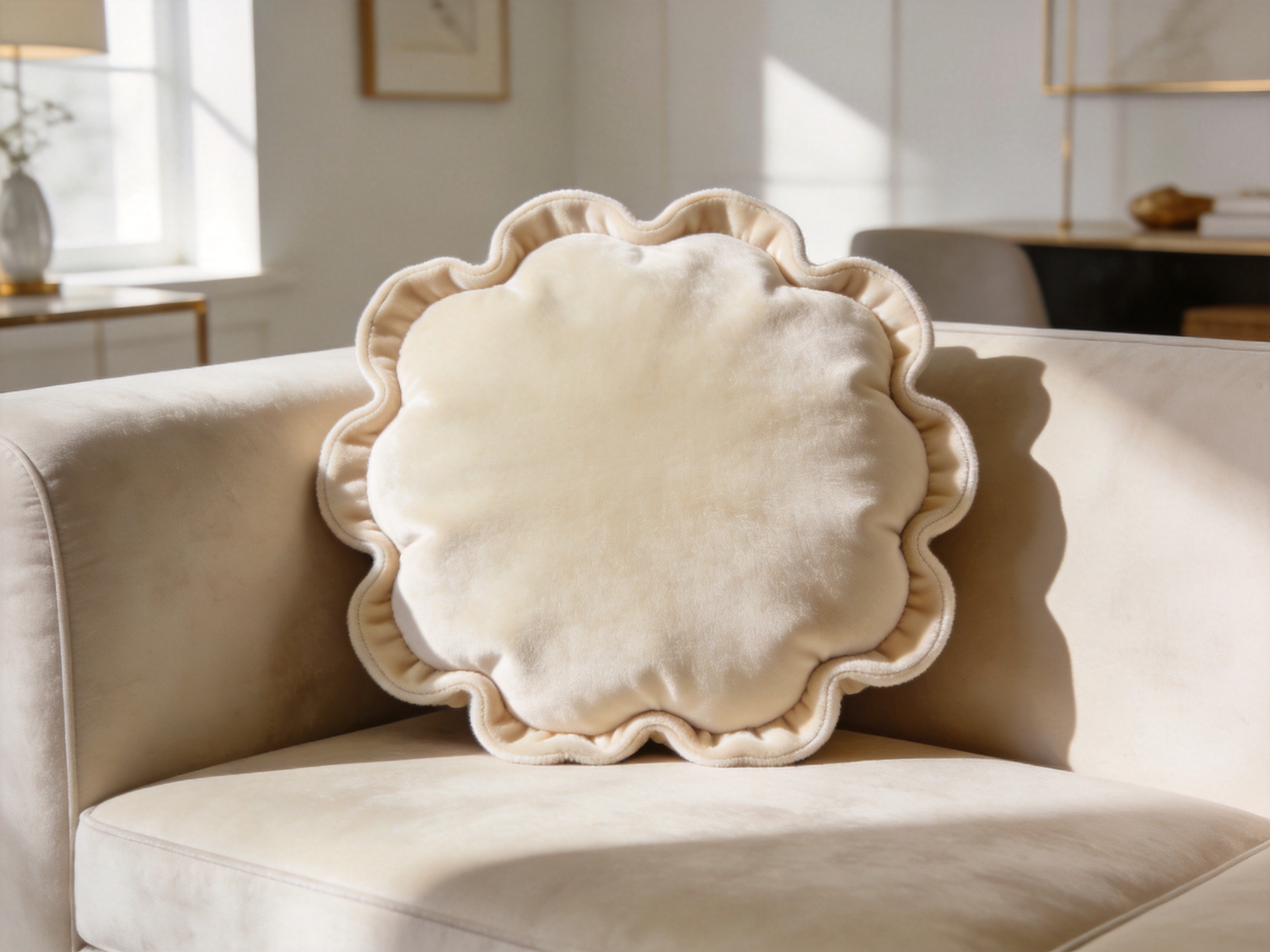
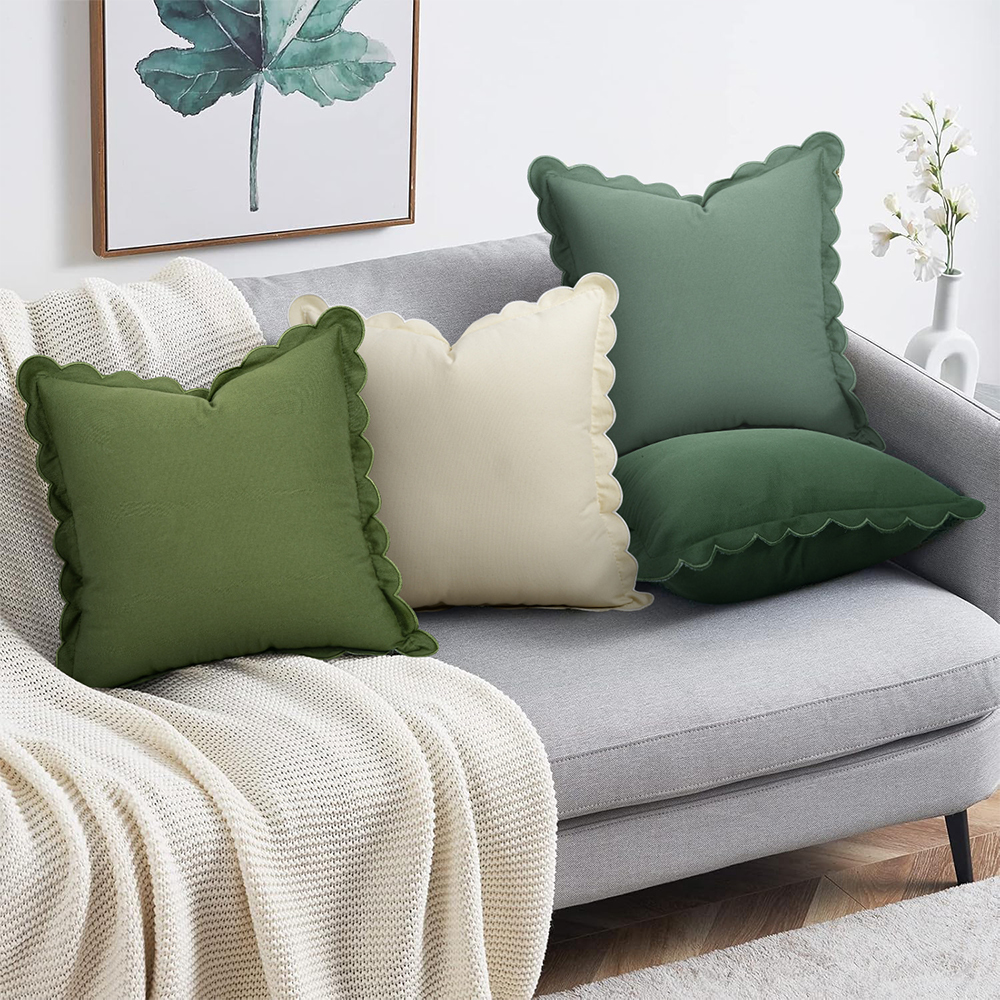
The Scalloped Cushion Deco Pillow is a 45cm x 45cm filled cushion made from microfiber. Its most recognizable feature is the scalloped edge finish, which gives the pillow a soft, decorative outline. Instead of relying on loud patterns or excessive embellishment, the scalloped border adds quiet visual interest. This makes the cushion suitable for a wide range of interior styles, from contemporary minimalism to cottage-inspired comfort and elegant transitional spaces.
The product is designed as a versatile accent cushion for beds, sofas, armchairs, lounge areas, guest rooms, and hospitality settings. Its square shape is a widely accepted size in the global home textile market because it works well individually, in pairs, or as part of a layered arrangement. At 45cm x 45cm, it is large enough to provide comfort and visual presence but compact enough to remain easy to place and move.
The microfiber fabric contributes softness and smoothness, creating a comfortable hand feel that appeals to everyday users. Microfiber is also valued for its practical performance in decorative textile applications because it can offer a pleasant touch, good color expression, and dependable wear when properly selected and finished. The filled construction makes the cushion ready for use, while the invisible zipper maintains a sleek appearance by keeping the closure discreet.
Unlike some decorative cushions that prioritize appearance but sacrifice comfort, this pillow is intended to do both. It can complete a styled bedding arrangement, soften the appearance of a sofa, or add a refined detail to a reading corner. The scalloped edge creates a crafted look, while the invisible zipper ensures the overall design remains clean and uncluttered.
Key Product Specifications
| Feature | Product Detail | Customer Benefit |
|---|---|---|
| Product Type | Decorative filled cushion | Ready-to-use accent for beds, sofas, and lounges |
| Size | 45cm x 45cm | Versatile square format suitable for multiple styling layouts |
| Material | Soft microfiber | Smooth hand feel, comfort, and practical daily usability |
| Edge Design | Scalloped edge finish | Adds decorative charm without overwhelming the room |
| Closure | Invisible zipper | Maintains a neat, polished, and premium appearance |
| Application | Bed, sofa, lounge, chair, guest room, display setting | Flexible styling across residential and commercial interiors |
| Manufacturing Focus | Material inspection, precision sewing, filling control, final checking | Consistent quality for export markets and repeat orders |
The Design Appeal of a Scalloped Edge
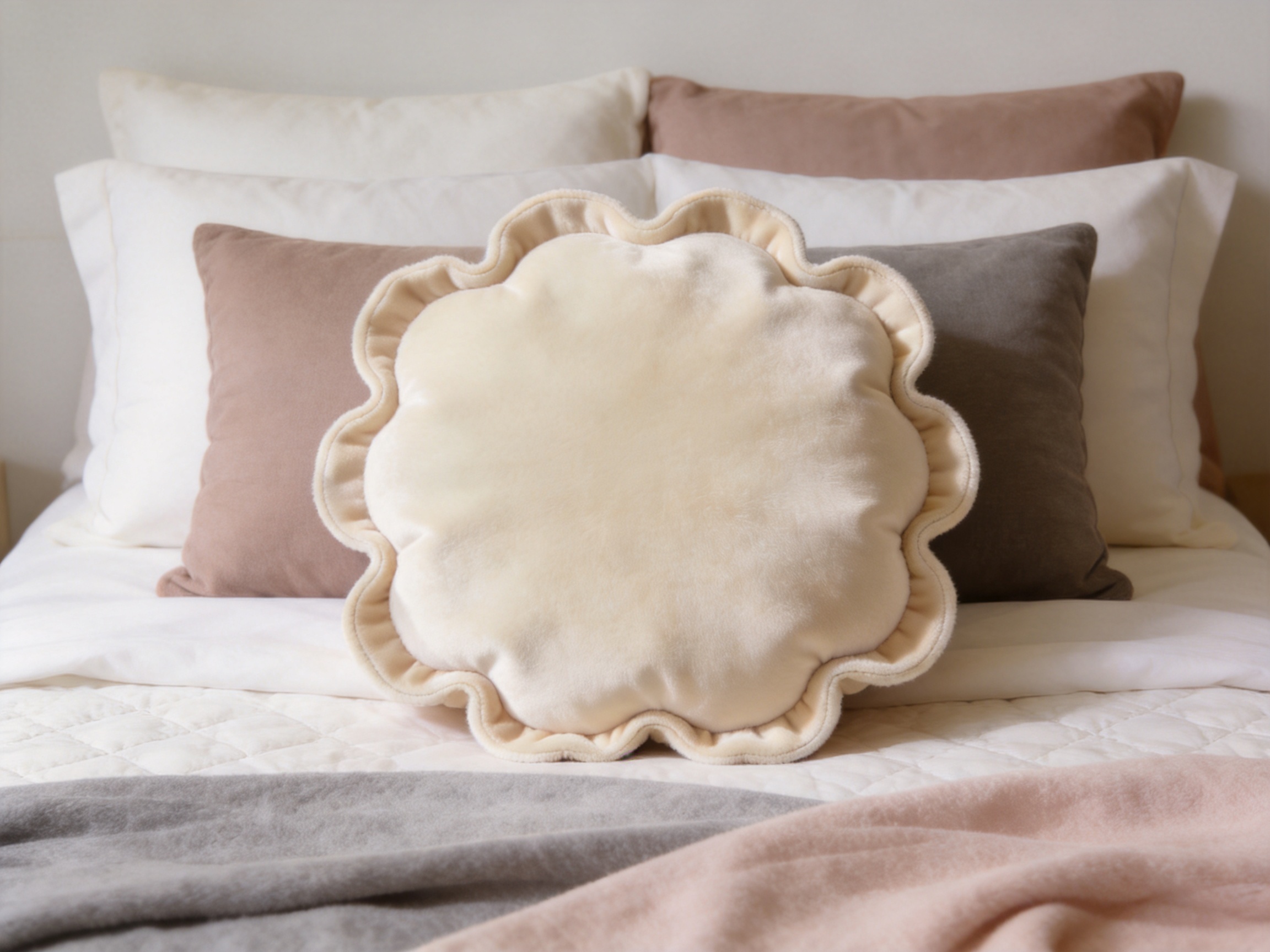
The scalloped edge is the defining design element of this decorative cushion. A scallop is a repeating curved edge that softens the geometry of a square pillow. Instead of a plain straight border, the cushion has a more crafted and refined silhouette. This detail gives the product personality while maintaining elegance.
In home textile design, edges matter. A simple cushion can appear ordinary if its outline is plain and its surface lacks texture. However, an embellished cushion can sometimes become too decorative, limiting its use to very specific interior themes. The scalloped edge offers a balanced middle ground. It is decorative enough to be noticed but subtle enough to coordinate with many bedding sets, quilts, throws, curtains, and upholstered furniture.
Compared with competitors that rely mainly on printed patterns, the scalloped construction provides a dimensional design feature. Print trends can change quickly, and a pattern that is fashionable in one season may become less appealing in the next. A shaped edge, however, has a more timeless quality. It communicates softness, care, and refinement without depending entirely on color or print.
The scalloped border also creates a sense of movement. When placed against a solid-color duvet cover or plain sofa fabric, the curved edge breaks up straight lines and adds visual warmth. In a bedroom, it can soften the structure of pillows, coverlets, and bed frames. In a living room, it can make a sofa arrangement feel more inviting and curated.
For retailers and importers, this design detail is especially useful because it gives the product a clear selling point. A consumer can quickly understand why the cushion is different from a basic square pillow. The scalloped edge can be presented as a decorative upgrade, a styling detail, and a point of tactile interest.
Microfiber Comfort and Practical Performance
Microfiber is an important part of the Scalloped Cushion Deco Pillow’s value. Decorative cushions are touched frequently, leaned against, moved from place to place, and used as styling accessories. The fabric must therefore feel pleasant while remaining practical. A soft microfiber surface can provide a smooth, comfortable touch that supports everyday use.
Microfiber is known for fine fibers that create a soft texture. In cushion applications, this can translate into a fabric that feels gentle against the skin and comfortable in casual seating or bedding arrangements. It also supports a neat surface appearance, which helps the cushion look fresh and well presented.
Compared with some rougher woven fabrics, microfiber can offer a more immediate sensation of softness. This is important for decorative pillows because purchase decisions are often influenced by touch. A customer may first notice the scalloped edge, but the hand feel can determine whether the product seems premium, comfortable, and worth buying.
Microfiber can also provide practical benefits for global home textile programs. It is adaptable to different colors and finishes, allowing the cushion to be developed for seasonal collections, neutral home ranges, or coordinated bedding stories. Its smoothness can help the scalloped edge appear clean and refined, emphasizing the shape rather than distracting from it.
When properly manufactured, microfiber decorative cushions can be suitable for high-volume retail while still maintaining a soft, consumer-friendly feel. This combination of comfort and scalable production is one reason microfiber remains a popular choice in home textile development.
Why the 45cm x 45cm Size Works So Well
The 45cm x 45cm cushion size is one of the most practical and widely used formats for decorative pillows. It is large enough to provide comfort when used on a sofa or bed, yet not so large that it becomes difficult to arrange. This dimension gives the product strong versatility for both consumers and professional buyers.
On a sofa, a 45cm square cushion can stand alone as a decorative accent or be paired with another cushion of the same size. It can also be layered with rectangular cushions, throws, or larger back cushions. In a bedroom, it works well in front of standard sleeping pillows or euro pillows, adding depth and interest to the bed styling arrangement.
For retail display, this size is efficient. It is familiar to consumers, easy to merchandise, and suitable for many packaging formats. For e-commerce, it is easy to describe, photograph, and compare. For hospitality or interior projects, it provides a reliable scale that suits guest beds, lounge seating, reception areas, and reading chairs.
Some competitors may offer decorative pillows in irregular sizes that look interesting but are less convenient for replacement inserts, storage, or coordination. The 45cm x 45cm dimension offers a practical advantage because it fits common styling expectations. Combined with the scalloped edge, it delivers both familiarity and uniqueness.
The Invisible Zipper Advantage
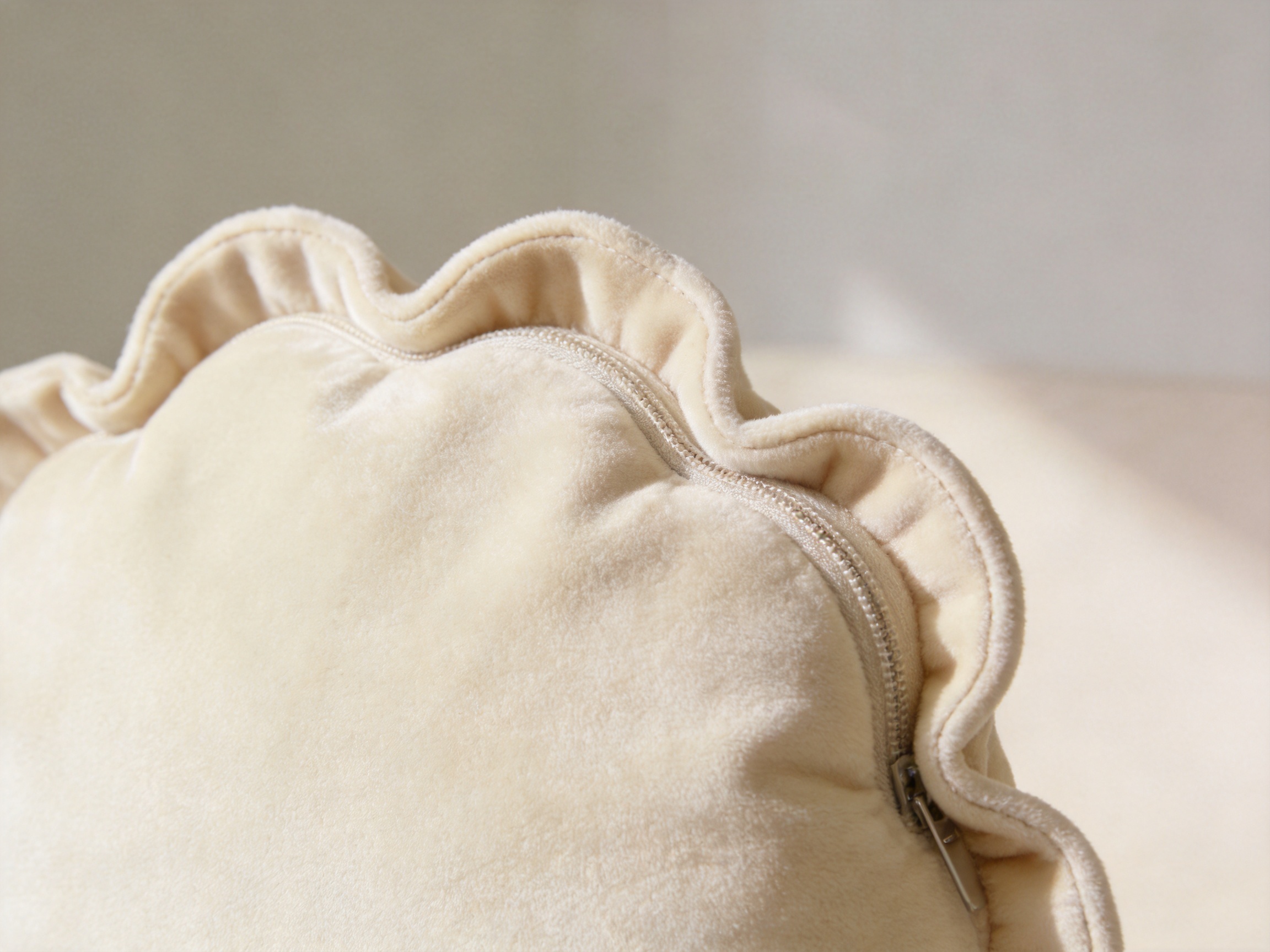
The invisible zipper is a small but meaningful feature. In decorative cushions, closures can either enhance or undermine the final appearance. A visible zipper, bulky seam, or poorly finished closure can distract from the design. The invisible zipper used in this cushion helps preserve a smooth and polished look.
An invisible zipper supports the elegance of the scalloped edge by keeping attention on the cushion shape and fabric. It also provides practical access when needed, depending on the product construction and care requirements. Even when a cushion is primarily decorative, a neat closure reflects better workmanship and creates a more premium impression.
Compared with envelope closures or exposed zippers, an invisible zipper is often preferred for products positioned as refined home decor. Envelope closures can gape or shift after use, while exposed zippers may feel rough or interrupt the design. A properly installed invisible zipper sits discreetly within the seam and contributes to a cleaner product profile.
For buyers, this feature also signals attention to detail. It suggests that the product has been designed not only for front-facing display but for overall quality. In competitive markets where many cushions look similar at first glance, closure quality can become a meaningful differentiator.
Advantages Over Common Competitor Cushions
The decorative cushion market is crowded. Many products use standard square shapes, basic piping, printed patterns, or simple fabric covers. The Scalloped Cushion Deco Pillow stands out because it combines a recognizable decorative edge with a soft material, convenient size, filled construction, and discreet zipper finish.
One advantage is the balance between decoration and versatility. Highly decorative cushions may appeal to a narrow group of customers but can be difficult to match with existing home decor. Plain cushions are easy to match but may not feel special. The scalloped cushion sits between these extremes. It is stylish enough to elevate a room but subtle enough to work across many interior themes.
A second advantage is tactile comfort. Some competitor cushions use fabrics that look attractive in photos but feel stiff, coarse, or overly synthetic in use. The microfiber construction supports a softer touch, improving the customer experience after purchase. This can lead to higher satisfaction because the cushion performs as both a visual and physical comfort item.
A third advantage is the finished appearance. The invisible zipper and shaped edge give the product a cleaner, more considered look than basic cushions with exposed closures or plain seams. These finishing details can help retailers position the pillow as a value-added item rather than a commodity product.
A fourth advantage is styling flexibility. The cushion can be used in bedrooms, living rooms, lounges, showrooms, and seasonal displays. It coordinates easily with duvet covers, comforters, quilts, coverlets, throws, and blankets. This makes it useful not only as a standalone product but also as part of broader home textile collections.
A fifth advantage is manufacturing consistency. A scalloped edge requires controlled cutting, accurate sewing, and careful finishing. When produced by an experienced home textile supplier with professional inspection systems, the product can maintain consistent shape and quality across orders. This is important for importers, retailers, and distributors who need repeatable standards.
How the Cushion Supports Modern Interior Trends
Home decor trends increasingly emphasize comfort, texture, softness, and personal expression. Consumers want spaces that feel relaxing but still curated. Decorative cushions are one of the easiest ways to refresh a room without replacing large furniture or bedding items. The Scalloped Cushion Deco Pillow fits this trend by offering an approachable design detail that can transform a setting quickly.
The scalloped edge aligns with the popularity of softened forms in interiors. Curved furniture, rounded mirrors, arched headboards, and organic decorative shapes have become common in modern home styling. A cushion with a curved edge detail works naturally within this design language. It can soften angular sofas, straight bed lines, and minimalist rooms.
The product also suits the demand for layered bedding. Many consumers and hospitality designers create beds with multiple pillows, cushions, quilts, coverlets, and throws. A scalloped cushion placed at the front of a bed arrangement adds a finishing touch without adding visual clutter. It can be used with neutral bedding for a calm look or paired with color-coordinated pieces for a more expressive style.
In living rooms, the pillow can create a gentle decorative point on sofas or lounge chairs. A pair of scalloped cushions can frame a seating area, while a single cushion can serve as a soft accent against textured upholstery. Because the design is not overly seasonal, it can remain relevant throughout the year.
Styling Applications for Beds, Sofas, and Lounges
On a bed, the Scalloped Cushion Deco Pillow can be placed in front of sleeping pillows to create a layered hotel-inspired look. It can be paired with a quilt or coverlet to add softness and decorative detail. In a neutral bedroom, it provides texture and shape; in a colorful bedroom, it can act as a balancing element that connects different textile layers.
On a sofa, the cushion works well as an accent piece. It can be used with plain cushions to add a refined edge detail, or it can be combined with throws and blankets for a cozy setting. The square size makes it easy to arrange at sofa corners, in the center of a loveseat, or on an armchair.
In a lounge or reading area, the cushion adds comfort and a sense of completion. It can make a chair feel more inviting and can visually connect seating with nearby curtains, rugs, or bedding textiles. In commercial settings such as boutique hotels, serviced apartments, or staged interiors, the scalloped edge can create a memorable decorative impression without requiring a complicated styling scheme.
The cushion is also useful for seasonal refreshes. Retailers can present it in spring collections as a soft, charming accent; in autumn collections as part of layered comfort styling; or in holiday displays as an elegant decorative pillow that coordinates with throws and blankets. Its appeal is not limited to one season, which improves its commercial value.
Manufacturing Strengths Behind the Product
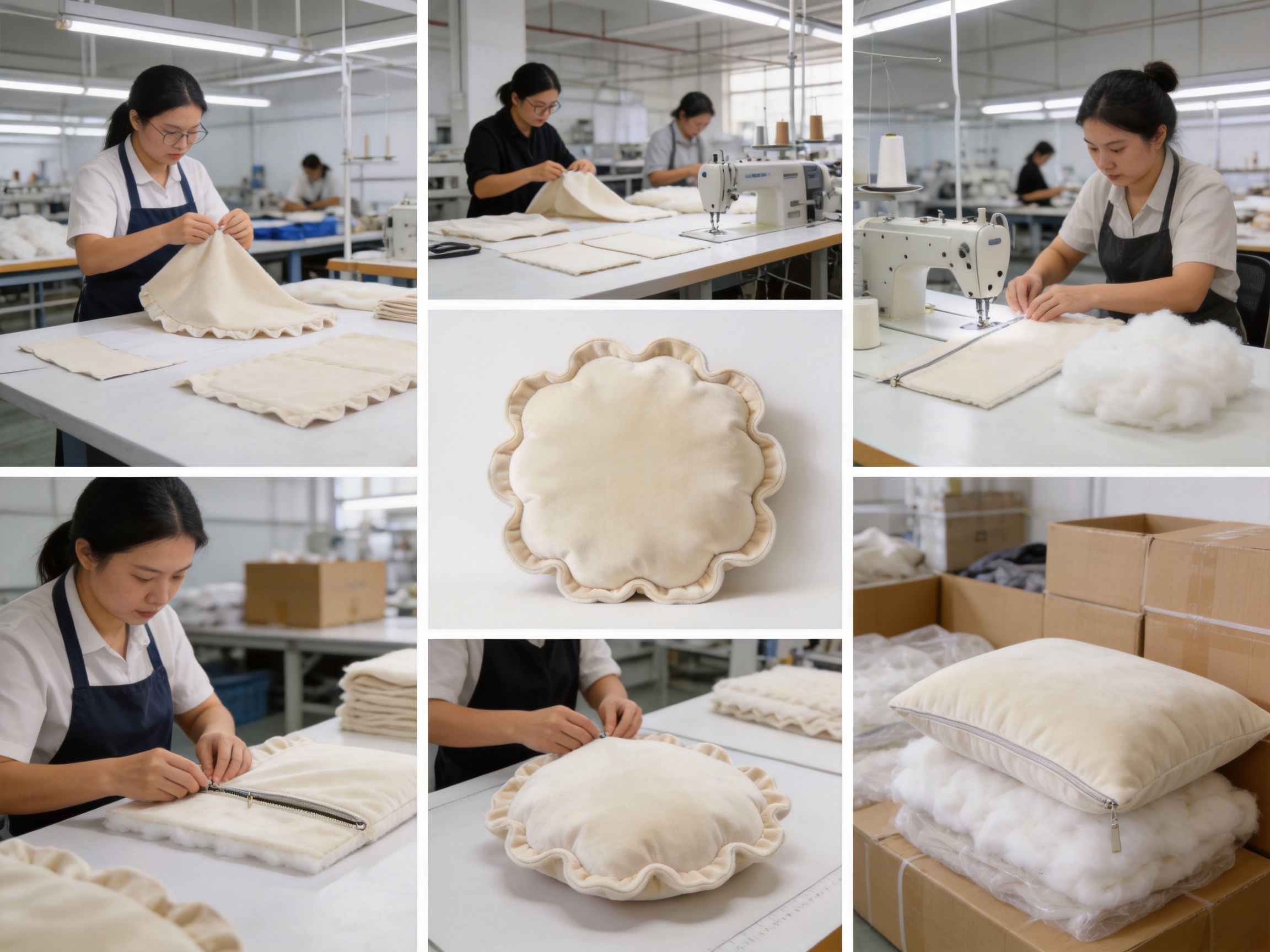
A decorative cushion depends on more than design. Its final quality is shaped by material control, cutting accuracy, sewing skill, filling management, zipper installation, inspection, and packaging. The company behind this product is a professional bedding and home textile export enterprise based in Hangzhou, China, with experience in premium bedding collections and related soft home products. Its product portfolio includes duvet covers, quilt covers, comforters, quilts, bedcovers, curtains, cushions, throws, and blankets.
This broad product background matters because cushions often need to coordinate with larger bedding and home textile collections. A supplier that understands bedding construction, fabric performance, quilting, finishing, and export packaging can develop cushions that integrate smoothly with complete room programs. The Scalloped Cushion Deco Pillow benefits from this wider knowledge of home textile design and production.
The company emphasizes integrity, design excellence, superior quality, expert knowledge, and conscious practice. These values are reflected in the way products are developed and supervised. A professional research and design team follows global fashion trends while considering functional needs. This helps ensure that the cushion is not merely decorative but also suitable for real market demand.
Experienced technicians supervise the production process from raw material inspection to final packaging. This is important for a product like the scalloped cushion because the edge detail requires consistent execution. If cutting or sewing is inaccurate, the scalloped border may appear uneven. If filling is not controlled, the cushion may look flat, lumpy, or distorted. If the zipper is poorly installed, the premium appearance may be compromised.
The company’s manufacturing approach focuses on preventing these problems before they reach the customer. By managing each stage, it supports stable quality, reliable delivery, and product consistency for international buyers.
Design and Development Process
The development of a cushion begins with understanding the market. Designers study global home textile trends, including colors, shapes, fabric preferences, room styling directions, and consumer behavior. For the Scalloped Cushion Deco Pillow, the design direction centers on soft elegance, practical comfort, and broad styling compatibility.
Once the concept is defined, product details are refined. The size must be suitable for common home settings. The scalloped edge must be proportioned correctly so that it is visible but not exaggerated. The microfiber must be selected for softness, appearance, and suitability for sewing. The zipper must be positioned to remain discreet while supporting clean construction.
Sampling is a key stage. A sample allows the design team and technicians to evaluate shape, fabric feel, seam quality, edge definition, filling volume, and overall appearance. Adjustments may be made to improve the scallop curve, seam tension, zipper placement, or cushion fullness. This step reduces risk before bulk production.
The advantage of working with an experienced home textile supplier is that design ideas can be translated into manufacturable products. Some decorative concepts look attractive on paper but are difficult to produce consistently. The scalloped cushion succeeds because the design is elegant while remaining practical for controlled production.
Raw Material Inspection
Raw material inspection is a foundation of product quality. Before production begins, microfiber fabric should be checked for appearance, hand feel, color consistency, width, surface defects, and suitability for the required product finish. Any inconsistency in fabric can affect the appearance of the finished cushion.
For a decorative pillow, surface quality is especially important. Customers will see and touch the cushion closely. Fabric flaws, uneven coloration, or texture inconsistencies can reduce perceived value. By inspecting materials before cutting, the manufacturer can identify issues early and avoid unnecessary waste or rework.
The filling material also requires control. A filled cushion should have enough volume to look attractive and feel comfortable. Insufficient filling can make the cushion appear weak, while excessive filling can distort the seams or scalloped edge. Proper filling standards help maintain a balanced shape.
Zippers, threads, labels, and packaging materials are also part of quality control. A decorative cushion is a complete product, and a weakness in any component can affect the customer experience. The invisible zipper must operate smoothly and integrate neatly into the seam. Thread must be suitable for the fabric and construction. Packaging must protect the cushion during storage and transport.
Precision Cutting for a Consistent Scalloped Shape
Cutting accuracy is particularly important for this product because of the scalloped edge. A plain square cushion can tolerate minor variations more easily than a shaped-edge design. With scallops, every curve must align correctly to create a harmonious border.
Precision cutting begins with accurate pattern preparation. The scallop curve must be designed so that it can be sewn and turned cleanly. During cutting, fabric layers must be controlled to prevent shifting. If fabric shifts, the scalloped sections may become uneven, leading to visible quality problems after sewing.
Experienced production technicians understand how fabric behavior affects cutting results. Microfiber can require careful handling to maintain clean edges and consistent shapes. Proper cutting tools, stable layout methods, and inspection after cutting all contribute to a better final product.
This manufacturing discipline gives the scalloped cushion an advantage over lower-quality competitors. Products with decorative edges can look charming in a photograph but inconsistent in bulk production if cutting is not controlled. A supplier with strong process management can maintain the design’s intended look across large quantities.
Sewing and Edge Finishing
Sewing is where the cushion’s design becomes visible. The scalloped edge must be stitched with consistent seam allowance, smooth curves, and proper tension. If stitches are uneven, the edge may pucker. If seam allowance varies, the scallops may appear irregular. If the curves are not handled carefully, the cushion may lose its refined outline.
Skilled sewing operators are essential for this type of product. The construction requires attention to the relationship between fabric, filling, zipper, and edge shape. The invisible zipper must be inserted cleanly, and the seam must remain stable after filling. The corners and curves must be finished so the cushion retains its decorative form.
Edge finishing also affects durability. Decorative cushions are frequently handled, squeezed, and repositioned. Seams must hold up to regular use. Proper stitching, thread selection, and seam finishing help maintain both appearance and structure.
Compared with basic pillows that use straight seams, scalloped pillows demand more technical care. This gives the product a higher perceived value and creates an opportunity for differentiation. It also means that buyers benefit from sourcing from a supplier with proven textile manufacturing expertise.
Filling Control and Shape Management
The cushion is supplied as a filled cushion, which means the filling process is crucial. A well-filled decorative pillow should feel comfortable, recover reasonably after use, and maintain a pleasing shape. Filling must be distributed evenly so that the cushion does not look hollow in the center or bulky at the edges.
For a scalloped cushion, filling control is even more important because the edge detail must remain visible. Too much pressure from filling can stretch or distort the scalloped border. Too little filling can make the curves collapse or appear weak. The correct filling volume supports the cushion’s decorative structure while preserving softness.
Shape management may include checking the cushion after filling, adjusting distribution, and confirming that the surface remains smooth. This step improves presentation for retail shelves, e-commerce photography, and customer use. A cushion that looks full and balanced creates a stronger first impression.
Quality Inspection and Final Packaging
Quality inspection should take place throughout production, not only at the end. In-process checks help identify issues early, such as fabric defects, cutting errors, stitch irregularities, zipper problems, or filling inconsistencies. Final inspection confirms that the cushion meets appearance, measurement, construction, and packaging requirements.
For the Scalloped Cushion Deco Pillow, inspectors may check size accuracy, edge symmetry, surface cleanliness, seam security, zipper function, filling balance, and overall presentation. Because the product is intended for export markets, consistency across cartons and batches is important. Retailers and importers need products that match approved samples and meet customer expectations.
Packaging protects the cushion during transportation and storage. It also influences how the product appears when received by buyers, warehouses, or end consumers. Clean folding or compression methods, appropriate carton packing, and clear labeling can all support efficient logistics and reduce damage risk.
The company’s experience in exporting bedding and home textiles supports these requirements. Export products must be prepared for international transit, customs handling, warehouse storage, and retail distribution. A supplier familiar with these processes can help reduce operational problems for buyers.
Certification, Safety, and Responsible Practice
Modern home textile buyers increasingly care about product safety, material responsibility, and environmental awareness. The company holds certifications such as OEKO-TEX Standard 100, which is widely recognized in the textile industry for testing materials for harmful substances. Such certification can support buyer confidence, especially in markets where consumers expect safer textile products for the home.
Responsible practice also includes attention to eco-friendly materials and dyes where applicable, reduction of energy consumption, and waste reduction. While decorative cushions are small products, their production is part of a larger textile system. Conscious practice helps align the product with current expectations from retailers, importers, and consumers.
For buyers, responsible manufacturing is not only an ethical consideration but also a commercial advantage. Products supported by recognized textile standards and quality management can be easier to present to customers who ask about safety and sustainability. This can strengthen trust and improve long-term business relationships.
Why Professional Export Experience Matters
International home textile trade requires more than making a product. It requires communication, sampling, compliance awareness, production planning, packaging coordination, shipment preparation, and after-sales support. A professional export company with years of experience can help buyers manage these steps more smoothly.
The company behind the Scalloped Cushion Deco Pillow was founded in 2018 and has developed its capabilities through years of work in bedding design, materials, and production techniques. Its experience with global customers helps it understand different market expectations, from style preferences to packaging standards and quality requirements.
For importers and retailers, this experience reduces sourcing risk. A product may look appealing, but successful purchasing depends on whether it can be delivered consistently, safely, and on time. A supplier with a professional design team, technical supervision, and export knowledge can provide stronger support than a simple trading source without textile expertise.
The company’s location in Hangzhou, a city with a strong textile and export environment, also supports access to industry resources, skilled personnel, and supply chain coordination. This helps the company respond to product development needs and production requirements for home textile collections.
Commercial Value for Retailers and Importers
The Scalloped Cushion Deco Pillow offers strong commercial value because it is easy to understand, easy to style, and easy to integrate into broader product ranges. Retailers can position it as a decorative accent, a bedroom finishing piece, a sofa cushion, or part of a coordinated home textile collection.
Its scalloped edge provides a visible feature that can be highlighted in product descriptions, photography, packaging, and store displays. The microfiber material supports a soft comfort message. The 45cm x 45cm size is familiar and practical. The invisible zipper adds a premium finishing point. Together, these features create a product story that is simple but effective.
For importers, the cushion can support multiple sales channels. It can be sold through home decor stores, bedding retailers, department stores, online marketplaces, boutique shops, and hospitality suppliers. Its styling flexibility helps it appeal to different customer segments without requiring extensive explanation.
The product can also be developed in different colors to match seasonal collections or buyer-specific ranges. Neutral tones may suit minimalist and hotel-inspired interiors, while soft pastels can support spring and romantic themes. Deeper colors can work for autumn, winter, or luxury-inspired collections. The scalloped edge remains the signature design detail across variations.
Consumer Experience After Purchase
A successful decorative cushion must continue to satisfy the customer after it leaves the store. The Scalloped Cushion Deco Pillow is designed to provide everyday enjoyment through its softness, shape, and appearance. Customers can place it on a sofa for comfort, use it as a bed accent, or move it between rooms as decor changes.
The soft microfiber fabric encourages touch and use. The filled construction means the cushion is immediately ready to display. The invisible zipper keeps the product looking neat from different angles. The scalloped edge gives it a distinctive look that can make a room feel more thoughtfully decorated.
Because the cushion is not overly bold, customers are less likely to feel restricted by it. It can stay in a room through multiple seasonal updates and coordinate with different throws, quilts, and bedding sets. This extends its perceived value and makes it a practical purchase.
Care and Maintenance Considerations
Care expectations for decorative cushions depend on the final care label, fabric treatment, filling type, and buyer requirements. In general, microfiber cushions are valued for practical home use, but proper care instructions should always be followed. Customers should refer to the product label for washing, spot cleaning, drying, and ironing guidance.
To maintain appearance, users can regularly fluff the cushion to redistribute filling and preserve shape. The cushion should be kept away from sharp objects that may damage the fabric or seams. If used in high-contact areas, gentle spot cleaning may help maintain surface freshness between deeper cleaning cycles, depending on care instructions.
Retailers can improve customer satisfaction by clearly presenting care information. Decorative cushions are often purchased for appearance, but customers appreciate knowing how to keep them looking good. Clear care guidance reduces misuse and supports longer product life.
Integration with Broader Home Textile Collections
One of the strongest advantages of this cushion is its ability to coordinate with other home textile categories. The company’s broader product portfolio includes duvet covers, comforters, quilts, coverlets, throws, blankets, curtains, and cushions. This makes it possible to build cohesive collections around color, texture, and mood.
For example, the Scalloped Cushion Deco Pillow can be paired with a quilted coverlet for a soft layered bedroom look. It can coordinate with a throw blanket on a sofa to create a warm living room setting. It can be used with curtains in similar tones to connect textile elements across a room. This collection potential is valuable for retailers because it encourages multi-item purchases.
In bedding programs, decorative cushions often act as the final styling component. A duvet cover or comforter provides the main surface, while quilts and throws add layers. Cushions complete the look and make the bed feel designed. A scalloped cushion adds a distinctive finishing touch without requiring complex styling.
For e-commerce, coordinated collection photography can increase product appeal. Showing the cushion with matching or complementary bedding helps customers imagine how it will look in their own homes. This can improve conversion because customers buy not only a product but a complete visual idea.
Quality as a Long-Term Competitive Strategy
In the home textile industry, price competition is common. However, long-term success depends on more than low cost. Buyers need products that meet expectations, generate positive customer reviews, and maintain consistency across repeat orders. The Scalloped Cushion Deco Pillow demonstrates how design and quality can create value beyond basic price comparison.
The scalloped edge requires more care than a simple straight-edge pillow, but it also gives the product a stronger identity. The soft microfiber improves touch and comfort. The invisible zipper enhances finishing quality. The filled construction provides convenience. These details help the cushion stand apart in a crowded category.
The company’s approach to design development, material inspection, technical supervision, certification awareness, and responsible practice supports this quality strategy. By focusing on both product beauty and production reliability, the supplier can serve buyers who want dependable home textile programs rather than short-term commodity items.
Q&A Section
What makes the Scalloped Cushion Deco Pillow different from a standard cushion?
The main difference is its scalloped edge finish. This curved decorative border gives the cushion a more refined and crafted appearance than a plain square pillow. It also includes soft microfiber fabric, a practical 45cm x 45cm size, filled construction, and an invisible zipper for a neat finish.
Is the cushion suitable for both beds and sofas?
Yes. The 45cm x 45cm size is highly versatile and works well on beds, sofas, armchairs, lounges, and guest room settings. It can be used alone, in pairs, or as part of a layered textile arrangement with throws, quilts, or bedding sets.
Why is microfiber used for this decorative cushion?
Microfiber is selected for its soft hand feel and practical performance in home textile applications. It helps create a comfortable cushion surface while supporting a smooth and refined appearance. This makes it suitable for daily decorative use.
What is the benefit of an invisible zipper?
An invisible zipper keeps the cushion looking clean and polished. It avoids the distraction of an exposed closure and supports the overall premium appearance of the product. It is especially useful for a decorative cushion where finishing details matter.
How does the scalloped edge improve interior styling?
The scalloped edge softens the outline of the cushion and adds visual interest. It works well with modern trends favoring curved forms, layered textures, and cozy interiors. It can make a bed or sofa look more thoughtfully styled without overwhelming the space.
Why is manufacturing control important for this product?
The scalloped edge requires precise cutting and careful sewing. If production is not well controlled, the curves can become uneven or distorted. Material inspection, accurate cutting, skilled stitching, filling control, and final quality checks help ensure consistent results.
Can this cushion be part of a larger home textile collection?
Yes. It can coordinate with duvet covers, comforters, quilts, coverlets, throws, blankets, and curtains. Its decorative but versatile design makes it suitable as a finishing accessory in broader bedroom or living room collections.
What kind of buyers can benefit from this product?
Retailers, importers, wholesalers, e-commerce sellers, hospitality suppliers, and interior product distributors can all benefit from this cushion. It has a clear design feature, practical size, comfortable material, and broad styling application.
Does the company have experience in home textile exports?
Yes. The company is experienced in bedding and home textile exports, with a product range that includes duvet covers, quilt covers, comforters, quilts, bedcovers, curtains, cushions, throws, and blankets. This experience supports product development, quality control, packaging, and international buyer service.
What quality values support the product?
The product is supported by values such as design excellence, superior quality, expert knowledge, integrity, and conscious practice. Production supervision from raw material inspection to final packaging helps maintain reliable quality for export markets.
Conclusion
The Scalloped Cushion Deco Pillow is a strong example of how a small home textile product can deliver meaningful design value. Its 45cm x 45cm format provides practical versatility, its microfiber fabric offers softness, its filled construction ensures immediate usability, its invisible zipper creates a clean finish, and its scalloped edge gives it a charming decorative identity.
Compared with ordinary cushions, it offers a more refined appearance and a clearer selling point. Compared with overly decorative pillows, it remains versatile and easy to coordinate. This balance makes it suitable for bedrooms, sofas, lounges, hospitality interiors, retail collections, and e-commerce product ranges.
Behind the product, professional manufacturing and export strengths further increase its value. Material inspection, precision cutting, skilled sewing, filling control, zipper finishing, quality checking, responsible practice, and international trade experience all support consistent product quality. The company’s broader expertise in bedding and home textiles also allows the cushion to integrate naturally into coordinated collections.
For buyers seeking a decorative cushion that combines elegance, comfort, and commercial reliability, the Scalloped Cushion Deco Pillow offers a compelling solution. It is not simply an accessory; it is a finishing detail that can soften a room, elevate a textile collection, and create a more inviting home environment.
References
American Association of Textile Chemists and Colorists. Textile Testing and Quality Control Guidelines.
OEKO-TEX Association. Standard 100 by OEKO-TEX: General Information and Testing Principles.
Gale, C., and Kaur, J. The Textile Book. Berg Publishers.
Gordon, B. Textiles: The Whole Story. Thames & Hudson.
Kadolph, S. J. Textiles. Pearson Education.
Sinclair, R. Textiles and Fashion: Materials, Design and Technology. Woodhead Publishing.

- QUICK LINKS
- Company
- Customize
- Sustainable
- Download
- Contact Us
- GET IN TOUCH
-
- [email protected]
[email protected] - +86-13777321650
- +86-571-87247829
- Room 703, Building 2, No. 498 Fengqing Road, Gongshu District, Hangzhou City, Zhejiang Province, China
- [email protected]
- WHAT’S NEWS
- Corporate News
- Industry News