+86-13777321650


 русский
  Español

Velvet Cushion Deco Pillow with Pom Pom Ball Fringe: Soft Luxury, Playful Detail, and Export-Ready Quality
Content
- 1 Product Overview: A Decorative Cushion Made for Everyday Styling
- 2 Why Velvet Remains a Strong Choice for Decorative Cushions
- 3 The Pom Pom Ball Fringe: A Small Detail with Strong Decorative Impact
- 4 Design Versatility for Beds, Sofas, Chairs, and Interior Displays
- 5 Key Product Specifications and Benefits
- 6 Advantages Over Common Competitor Products
- 7 The Role of Material Selection in Product Quality
- 8 Advanced Manufacturing Processes Behind a Reliable Cushion
- 9 Quality Control from Raw Material to Final Packaging
- 10 Company Strengths Supporting the Product
- 11 How the Cushion Fits into Coordinated Home Textile Programs
- 12 Market Appeal for Retailers, Wholesalers, and Interior Buyers
- 13 Styling Recommendations for Different Interior Themes
- 14 Practical Considerations for Buyers
- 15 Sustainability and Conscious Practice in Home Textiles
- 16 Q&A: Common Questions About the Velvet Cushion Deco Pillow
- 16.1 What is the size of the cushion?
- 16.2 What material is used for the cushion?
- 16.3 What makes this cushion different from basic decorative pillows?
- 16.4 Can the cushion be used on both beds and sofas?
- 16.5 Why is the pom pom ball fringe important?
- 16.6 What is the benefit of an invisible zipper?
- 16.7 Is this product suitable for retail and wholesale programs?
- 16.8 How does the manufacturer support quality?
- 16.9 Can the cushion be coordinated with other home textile products?
- 16.10 Why is velvet a good choice for decorative cushions?
- 17 Conclusion: A Decorative Cushion with Style, Comfort, and Manufacturing Confidence
- 18 References
- 19 Product: Velvet cushion deco pillow with pom pom ball fringe
In modern home styling, small textile pieces often create the strongest emotional impression. A cushion may appear simple at first glance, yet it can transform a bed, soften a sofa, brighten a reading corner, and complete the atmosphere of a room. The Velvet Cushion Deco Pillow with Pom Pom Ball Fringe is designed for exactly this purpose: to bring together softness, charm, decorative detail, and practical finishing in one compact home textile product.
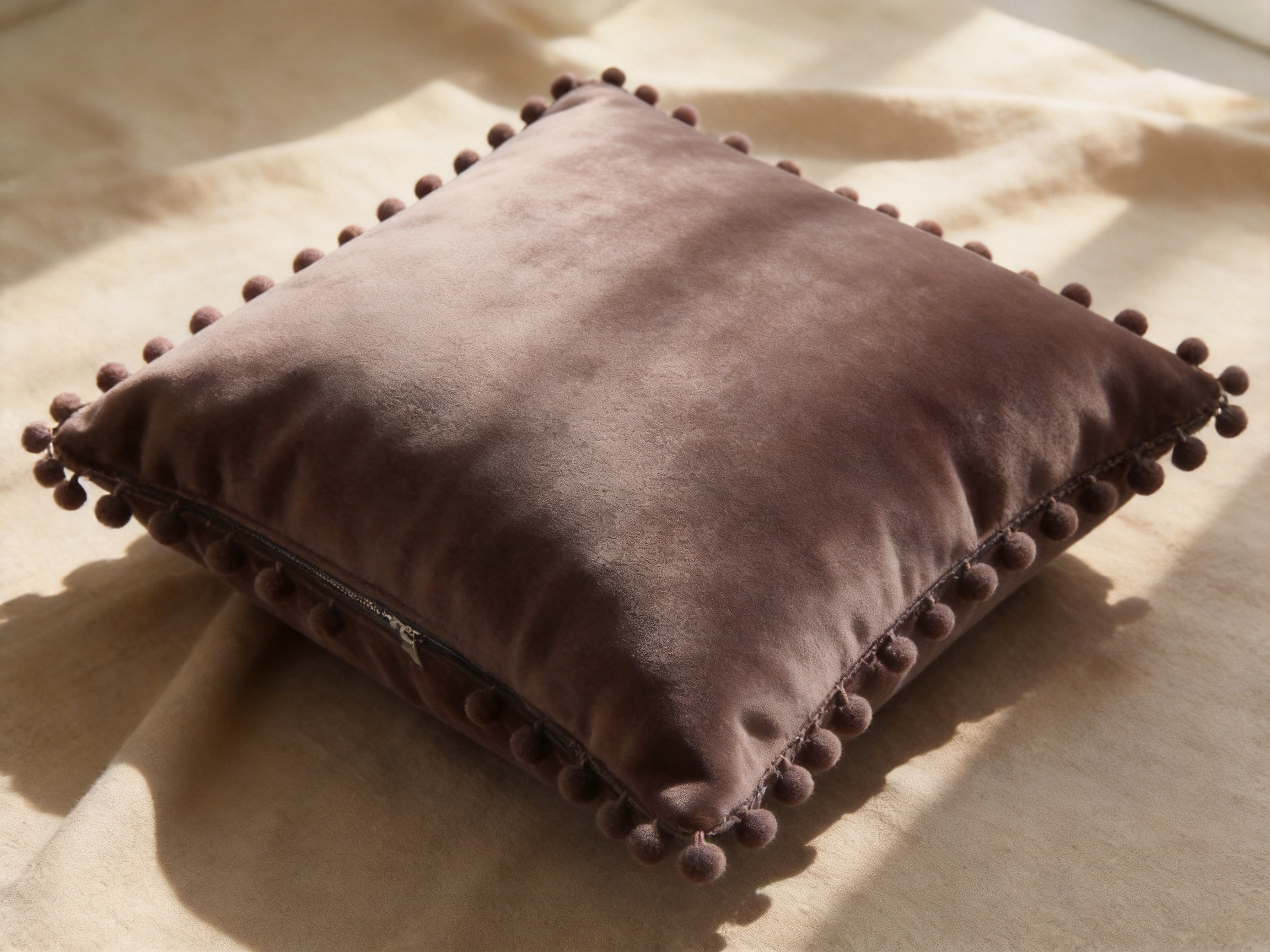
This decorative cushion is made from velvet and measures 45 cm by 45 cm, a versatile square size widely used for beds, sofas, armchairs, benches, and layered interior arrangements. Its most distinctive feature is the pom pom ball fringe, which gives the cushion a playful yet refined outline. The invisible zipper supports a clean appearance, while the filled cushion format makes it ready for immediate styling. Rather than functioning merely as a filler accessory, this pillow is created as a decorative accent that adds texture, color depth, and a feeling of comfort to contemporary living spaces.
For retailers, importers, wholesalers, designers, and home textile buyers, the value of a cushion lies not only in how it looks, but also in how consistently it can be manufactured, packed, shipped, and presented to end users. The product is supported by a professional bedding and home textile export company with experience in duvet covers, quilt covers, comforters, quilts, bedcovers, curtains, cushions, throws, and blankets. With a design-oriented development process, quality control from raw material inspection to final packaging, and attention to responsible production practices, the cushion reflects both decorative appeal and export-ready reliability.
Velvet cushion deco pillow with pom pom ball fringe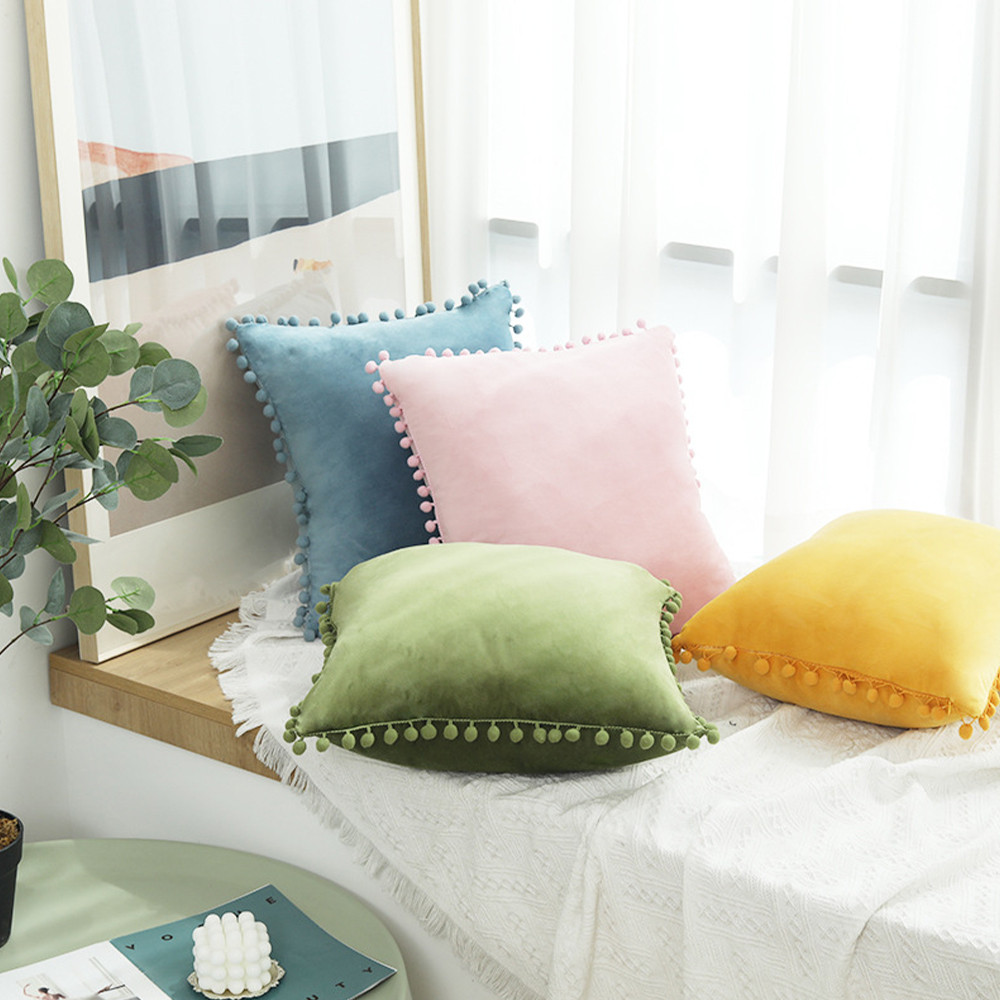
Product Overview: A Decorative Cushion Made for Everyday Styling
The Velvet Cushion Deco Pillow with Pom Pom Ball Fringe is a 45 cm by 45 cm filled cushion crafted from velvet. This size is especially popular because it is large enough to be visually noticeable but compact enough for flexible arrangement. It can be used as a single accent pillow on an occasional chair, paired symmetrically on a sofa, layered in front of larger cushions on a bed, or combined with throws and blankets to create a soft, inviting interior scene.
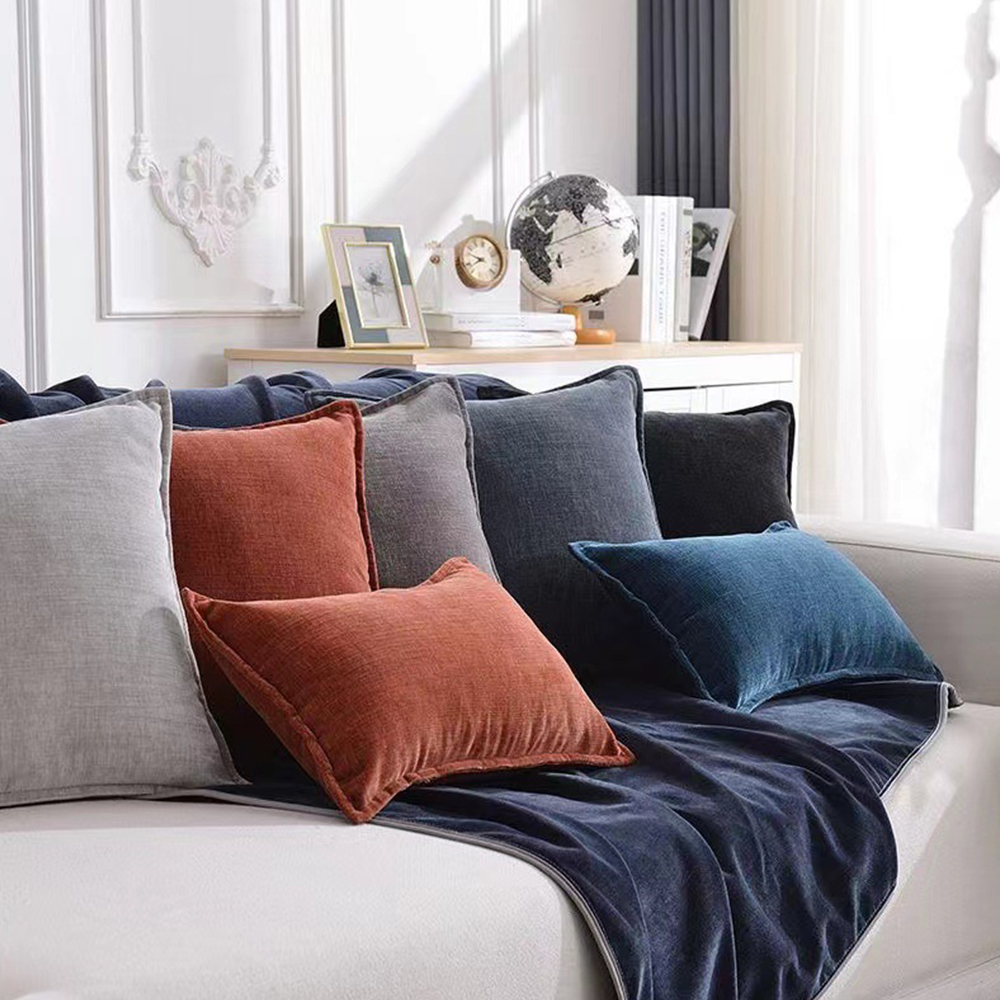
The velvet surface is central to the cushion’s appeal. Velvet has long been associated with comfort and luxury because of its dense pile, subtle sheen, and rich tactile character. When used in decorative cushions, velvet responds beautifully to light and shadow, giving even simple solid colors a deeper and more dimensional look. This makes the cushion suitable for both minimalist rooms that need a soft focal point and maximalist interiors that celebrate layered textures.
The pom pom ball fringe adds personality. Many decorative pillows rely only on color or printed pattern, but this product uses a dimensional edge detail to create visual movement. The fringe frames the cushion and softens its square outline, making it less rigid and more inviting. The result is a piece that can feel cheerful, cozy, stylish, and approachable at the same time.
The invisible zipper is another important detail. In decorative textiles, visible closures can interrupt the design, particularly when the cushion is intended to sit at the front of a styling arrangement. An invisible zipper helps maintain a neat surface and refined finish. It also supports practical use, as removable covers are easier to care for, inspect, and manage during production and quality checking.
Because the cushion is supplied as a filled cushion, it offers convenience for buyers and end users. A ready-filled cushion eliminates the need to match a separate insert, helps maintain the intended shape, and simplifies retail presentation. For e-commerce sellers, ready-to-use products can reduce confusion and improve customer satisfaction, since buyers receive a complete decorative piece rather than a cover alone.
Why Velvet Remains a Strong Choice for Decorative Cushions
Velvet continues to perform strongly in home textiles because it appeals to both visual and tactile senses. While cotton, linen, microfiber, and jacquard fabrics each have their place, velvet offers a distinctive softness and depth that can immediately elevate an interior. In the case of this cushion, the fabric choice supports the product’s identity as a cozy but decorative accent.
One advantage of velvet is its ability to create color richness. The pile structure can catch light from different angles, producing subtle tonal variation across the surface. This makes velvet cushions appear more luxurious than flat-woven alternatives, even when used in simple shapes. A 45 cm square velvet cushion can therefore have a stronger visual presence than a printed cushion made from a thinner or flatter fabric.
Another advantage is comfort. Cushions are not purely visual objects; people touch them, lean on them, hold them, and use them as part of daily relaxation. A velvet surface feels soft against the hand and can make a room feel warmer and more hospitable. This tactile quality is especially valuable for living rooms, bedrooms, guest rooms, boutique hotel spaces, and staged interiors.
Velvet also works well across seasons. Although it is often associated with autumn and winter due to its plush feel, it can be styled year-round when used as a decorative accent. In cooler months, it pairs naturally with quilts, knitted throws, faux fur textures, and deeper color palettes. In warmer seasons, it can be used sparingly with cotton bedding, light throws, and neutral upholstery to create contrast without overwhelming the room.
Compared with lower-cost plain polyester cushions, velvet helps a product stand out in competitive retail environments. A customer browsing cushions may quickly notice the touch and sheen of velvet. When this velvet surface is combined with a pom pom fringe, the product gains both material appeal and design personality, which strengthens its shelf and online listing performance.
The Pom Pom Ball Fringe: A Small Detail with Strong Decorative Impact
The pom pom ball fringe is one of the defining features of this cushion. Edge finishing is often underestimated in decorative pillow design, yet it strongly influences perceived value. A cushion with plain seams may be functional, but a cushion with a well-executed fringe can feel more complete, more styled, and more giftable.
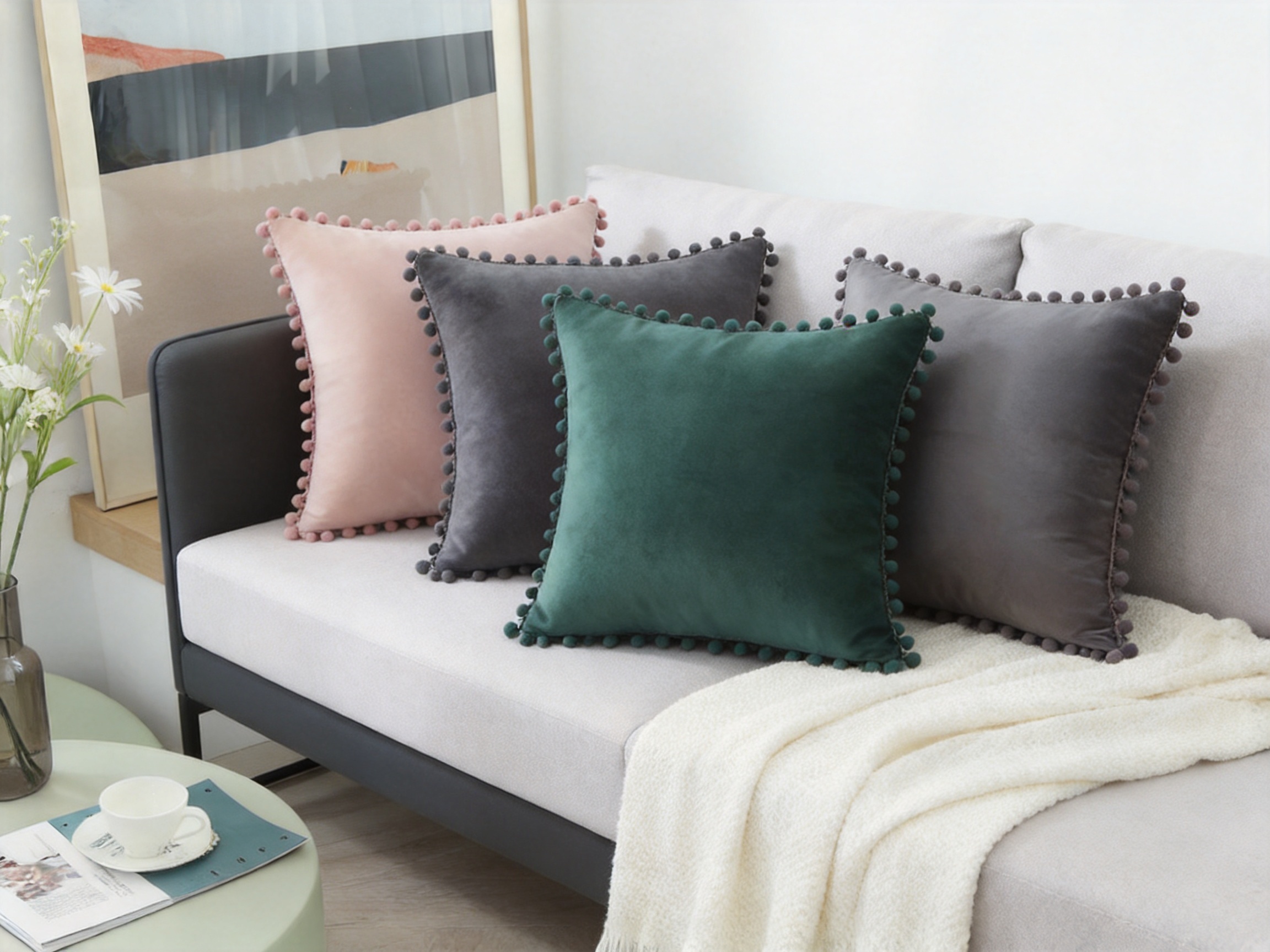
The rounded pom pom detail creates a soft border around the cushion. This adds a sense of playfulness without making the product childish. In adult interiors, pom pom edges can introduce warmth, movement, and hand-crafted charm. They help balance the sleek appearance of velvet by adding a textured, tactile frame. This combination of plush surface and dimensional edge gives the pillow a distinctive look that can appeal to a wide range of customers.
From a styling perspective, the fringe makes the cushion easy to use as a focal point. On a neutral sofa, the pom pom edge breaks up large areas of flat upholstery. On a bed, it can sit in front of plain pillowcases or duvet covers and add a decorative finish. In children’s rooms, guest rooms, dormitory spaces, and boutique retail settings, the fringe gives a friendly and inviting impression.
Compared with competitors that rely on printed graphics alone, a pom pom fringe provides a three-dimensional design element. Prints can be attractive, but they may date quickly or depend heavily on color trends. A textured trim can remain appealing across seasons because it works as a material feature rather than only a graphic motif. This helps the cushion maintain broader market relevance.
For manufacturing, fringe attachment requires careful sewing alignment, tension control, and finishing inspection. The pom pom balls should appear evenly distributed and secure, and the seam should be neat around all sides. Consistent execution of this detail is essential because the fringe sits on the outer edge and is immediately visible. The manufacturer’s experience in textile production and quality supervision supports this requirement.
Design Versatility for Beds, Sofas, Chairs, and Interior Displays
A strong decorative cushion must fit into multiple environments. The Velvet Cushion Deco Pillow with Pom Pom Ball Fringe is not limited to one interior style. Its velvet surface and playful edge allow it to move between classic, contemporary, bohemian, romantic, boutique, and casual home settings. This flexibility is one of its commercial advantages.
On a sofa, the cushion can be used in pairs for symmetry or mixed with other cushions for layered styling. Velvet pairs well with woven upholstery, leather seating, boucle fabrics, linen slipcovers, and smooth modern sofas. The pom pom trim adds a softer outline, which helps prevent the arrangement from appearing too formal. This makes the pillow suitable for both family homes and display spaces.
On a bed, the 45 cm size works well in front of standard sleeping pillows, euro shams, quilted coverlets, or duvet covers. A single cushion can create a simple boutique hotel effect, while multiple cushions can create a fuller decorative arrangement. Because the cushion is filled, it helps maintain a plump profile when placed in front of bedding sets.
In a reading nook or accent chair, one cushion can be enough to define the area. The velvet texture invites touch, while the fringe creates a relaxed and cozy feeling. For interior stylists, small details like this can make photographs and showroom displays look more finished. The cushion can also be used in seasonal visual merchandising, especially when paired with throws, blankets, and bedding in coordinated palettes.
The product’s decorative role extends beyond private homes. Boutique hotels, serviced apartments, guest houses, furniture showrooms, bedding shops, and lifestyle stores all use cushions to communicate comfort and design. A cushion with velvet and fringe detail can help create a premium impression without requiring a major interior renovation. This makes it commercially attractive for B2B buyers seeking accessible decorative upgrades.
Key Product Specifications and Benefits
The following table summarizes the core features of the cushion and explains how each feature contributes to practical and commercial value.
| Feature | Specification | Benefit |
|---|---|---|
| Product Type | Decorative filled cushion | Ready for immediate styling, retail display, and end-user use |
| Material | Velvet | Soft touch, rich surface depth, and elevated decorative appearance |
| Size | 45 cm x 45 cm | Popular square format suitable for sofas, beds, chairs, and layering |
| Edge Detail | Pom pom ball fringe | Adds playful texture, visual interest, and a distinctive border |
| Closure | Invisible zipper design | Maintains a neat look and supports practical cover handling |
| Application | Bed or sofa cushion | Works across bedrooms, living rooms, guest rooms, and display areas |
| Styling Value | Soft luxury with decorative charm | Helps differentiate product listings and physical retail presentations |
| Manufacturing Support | Produced by an experienced home textile export company | Improves consistency, quality control, and export readiness |
Advantages Over Common Competitor Products
In the cushion market, competition is broad. Many products appear similar at first glance, especially in online retail environments where customers compare images quickly. The Velvet Cushion Deco Pillow with Pom Pom Ball Fringe offers several advantages that help it stand apart from basic decorative pillows and lower-value cushion covers.
First, the combination of velvet and pom pom fringe creates a dual-texture design. Some competitor cushions may offer velvet without trim, while others may use fringe on plain fabric. This product combines both elements, creating a more layered decorative effect. The smooth plush surface contrasts with the rounded fringe, giving the cushion a richer visual identity.
Second, the filled cushion format increases convenience. Some competing items are sold as covers only, requiring the customer to purchase an insert separately. While cover-only products can be useful, they may lead to dissatisfaction if the insert size or fullness is not ideal. A filled cushion presents a complete product and helps preserve the intended shape.
Third, the invisible zipper supports a more refined appearance than exposed zipper closures. On lower-cost cushions, visible zippers, uneven stitching, or bulky seams can reduce perceived quality. A clean closure helps the cushion look polished from multiple angles, which is especially important for decorative display.
Fourth, the 45 cm square format is widely accepted and easy to merchandise. Unusual sizes can create challenges for inserts, packaging, storage, and customer expectations. This product uses a practical standard size that still provides enough surface area for velvet depth and fringe detail. For buyers managing multiple home textile categories, standardized sizing can simplify assortment planning.
Fifth, the product is backed by a company with a broader bedding and home textile background. This matters because cushions are often purchased as part of coordinated home ranges. A supplier experienced in duvet covers, quilts, comforters, throws, and blankets can help buyers develop cohesive collections rather than isolated products. This strengthens the cushion’s value within seasonal programs, private label ranges, and curated room sets.
Finally, the product benefits from quality supervision across production stages. Decorative trims require consistent sewing and careful inspection. Velvet requires attention to pile direction, cutting, handling, and packaging. A supplier with structured production management can reduce variation and help deliver stable quality across repeat orders.
The Role of Material Selection in Product Quality
Material selection is one of the most important stages in the development of a decorative cushion. The velvet must be chosen not only for appearance but also for hand feel, density, color effect, and suitability for sewing with trim. A fabric that looks attractive but stretches excessively, sheds easily, or crushes during packaging can create problems later in production and use.
For this cushion, the velvet material supports a soft and decorative surface. During development, attention is typically given to the fabric’s pile direction and surface consistency. When velvet panels are cut, the direction of the nap can influence how the finished cushion reflects light. Skilled production teams understand the importance of cutting panels consistently so that the finished cushion has a balanced and intentional appearance.
The pom pom fringe also requires suitable material and construction. The trim should complement the velvet rather than overpower it. It must be soft enough to feel pleasant and decorative, but secure enough to hold its shape around the cushion edge. If the trim is too loose, uneven, or poorly attached, the product may look unfinished. If it is too stiff, it may reduce the cushion’s cozy character. Balance is essential.
The filling is another important factor. A decorative cushion should appear plump and inviting. Insufficient filling can make the product look flat, while excessive or uneven filling can distort the shape or stress seams. For a 45 cm by 45 cm cushion, appropriate filling volume helps create a balanced square profile and supports attractive display photography.
The invisible zipper must also be selected and installed carefully. A zipper that catches, waves, or creates visible bulges can weaken the product’s overall impression. Proper zipper placement and stitching help the cushion remain neat while allowing access when needed. In a competitive market, these small details contribute significantly to perceived quality.
Advanced Manufacturing Processes Behind a Reliable Cushion
Although a decorative cushion may seem simple, reliable manufacturing involves multiple stages. Each stage affects the final appearance, durability, and consistency of the product. The company behind this product applies professional home textile production experience to manage these stages from development through packaging.
The process begins with product design and sampling. The design team considers market trends, customer preferences, functional needs, and production feasibility. For this cushion, the team must balance velvet texture, cushion size, pom pom proportion, zipper placement, and finished shape. A successful sample should look attractive, feel comfortable, and be realistic for repeated production.
After design confirmation, raw material inspection becomes important. Fabric may be checked for color consistency, surface flaws, hand feel, width, and pile direction. Trims such as pom pom fringe may be inspected for uniformity, spacing, and attachment quality. Zippers and filling materials may also be checked before mass production. Early inspection helps prevent defects from moving into later stages where correction is more costly.
Cutting is especially important for velvet. Fabric panels must be cut accurately to maintain the intended 45 cm by 45 cm finished size. Because velvet has a directional pile, cutting plans should consider nap direction so the final cushion does not show mismatched shading between panels. Accurate cutting also helps ensure straight seams and balanced corners.
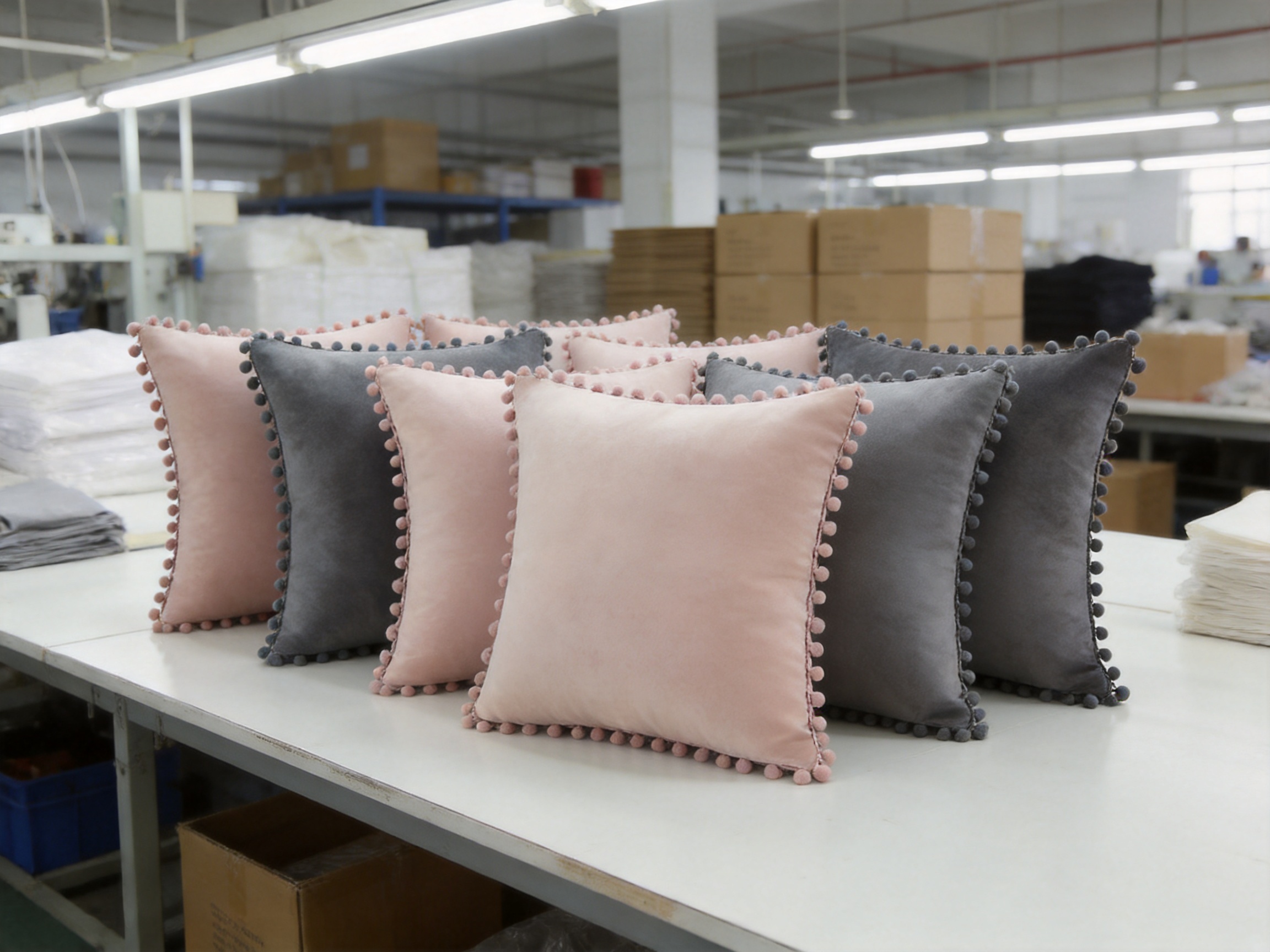
Sewing requires skilled handling. The pom pom fringe must be aligned around the cushion edge, and the seam must hold the trim securely without creating uneven tension. Corners must be shaped carefully so the fringe flows around the square form. The invisible zipper must be inserted neatly, allowing the product to retain a clean appearance. Experienced sewing operators and line supervisors help maintain consistency.
Filling and finishing are also controlled steps. The cushion should be filled evenly so it has a plump, attractive profile. The corners should not appear empty, and the surface should not show heavy lumps. After filling, the cushion may be shaped and inspected. Loose threads, uneven trim, surface marks, zipper issues, and size deviations can be identified before packing.
Final packaging protects the product during storage and shipping. Velvet can be sensitive to compression marks, so packaging should be planned to preserve appearance as much as possible. For export orders, packing consistency also matters for carton loading, warehouse handling, and retail distribution. A company experienced in international home textile exports understands the importance of practical, protective, and efficient packaging.
Quality Control from Raw Material to Final Packaging
Quality control is one of the strongest foundations of a reliable home textile product. Buyers need confidence that each shipment will meet agreed standards, and end users expect the cushion they receive to match the product image and description. The company’s production process is supervised by experienced technicians from raw material inspection to final packaging, providing a structured approach to quality assurance.
At the raw material stage, velvet fabric can be inspected for visual defects, hand feel, color consistency, and surface condition. Because velvet has a pile, surface irregularities can be more visible under light. Inspection helps remove unacceptable fabric before cutting begins. Trim inspection is equally important because the pom pom fringe is a major decorative feature. Inconsistent pom pom size or spacing would reduce the product’s polished appearance.
During production, in-line checks can help detect sewing issues early. These may include seam allowance consistency, fringe alignment, corner shaping, zipper installation, and panel matching. When problems are identified at the sewing stage, adjustments can be made before large quantities are completed. This reduces waste and supports more consistent output.
After filling, the finished cushion can be checked for size, shape, fullness, appearance, zipper function, and overall cleanliness. The product should have a balanced square profile and a neat decorative edge. The invisible zipper should open and close properly, and the cushion should not have visible loose threads or stains. Final inspection ensures that the product is suitable for retail, wholesale, or project delivery.
Packaging inspection completes the process. Correct labeling, carton organization, product count, and protection methods all matter in export business. A cushion that leaves the factory in good condition must also arrive at its destination in good condition. Proper packaging helps reduce transit damage and supports efficient handling by importers, warehouses, and retailers.
Strong quality control is a major advantage over competitors that focus only on low price. In home textiles, small defects can quickly affect customer reviews and return rates. A neat zipper, evenly attached fringe, and clean velvet surface all contribute to customer satisfaction. Consistent quality can also strengthen long-term buyer relationships and repeat orders.
Company Strengths Supporting the Product
The manufacturer and exporter behind this cushion is a professional bedding and home textile company founded in 2018 in Hangzhou, China. Over seven years of development, the company has built experience in bedding design, materials, and production techniques. Its portfolio includes duvet covers, quilt covers, comforters, quilts, bedcovers, curtains, cushions, throws, and blankets. This broad product range gives the company a strong understanding of how decorative textiles work together in real homes and commercial interiors.
One of the company’s important strengths is its focus on design excellence. A professional research and development team combines global fashion trends with functional needs, allowing products to reflect market demand rather than isolated design ideas. For a cushion like this, trend awareness matters because colors, textures, and decorative trims change with consumer preferences. A design team can help adapt the product for different markets, seasons, and retail concepts.
Another strength is quality awareness. The company emphasizes integrity, superior quality, expert knowledge, and conscious practice. These values are directly relevant to export textile business, where long-distance trade depends on trust and consistency. Buyers need suppliers who can communicate clearly, follow specifications, and maintain stable standards across shipments.
The company’s production process is supervised by experienced technicians from raw material inspection to final packaging. This structured supervision is especially useful for decorative products with multiple components. Velvet, fringe, filling, and zipper installation each require attention. By managing these details systematically, the company helps reduce quality risks and improve product reliability.
Certification is another meaningful strength. The company holds certifications such as OEKO-TEX Standard 100, reflecting attention to textile safety and responsible material standards. For global buyers, certifications can support compliance requirements and improve consumer confidence. In markets where customers increasingly ask about fabric safety and sustainable choices, certification awareness can be a commercial advantage.
The company is also committed to sustainable development by reducing energy consumption and waste while prioritizing eco-friendly materials and dyes. This does not only respond to environmental expectations; it also supports better long-term manufacturing discipline. Efficient material use, waste reduction, and responsible sourcing can contribute to stable production and improved brand reputation for buyers.
How the Cushion Fits into Coordinated Home Textile Programs
One of the benefits of sourcing cushions from a company with a full home textile portfolio is the opportunity for coordinated product development. Decorative cushions rarely exist alone in successful retail programs. They are often sold alongside duvet covers, comforter sets, quilts, coverlets, throws, blankets, curtains, and other soft furnishings. A cushion that coordinates with these categories can increase basket size and improve the visual coherence of a collection.
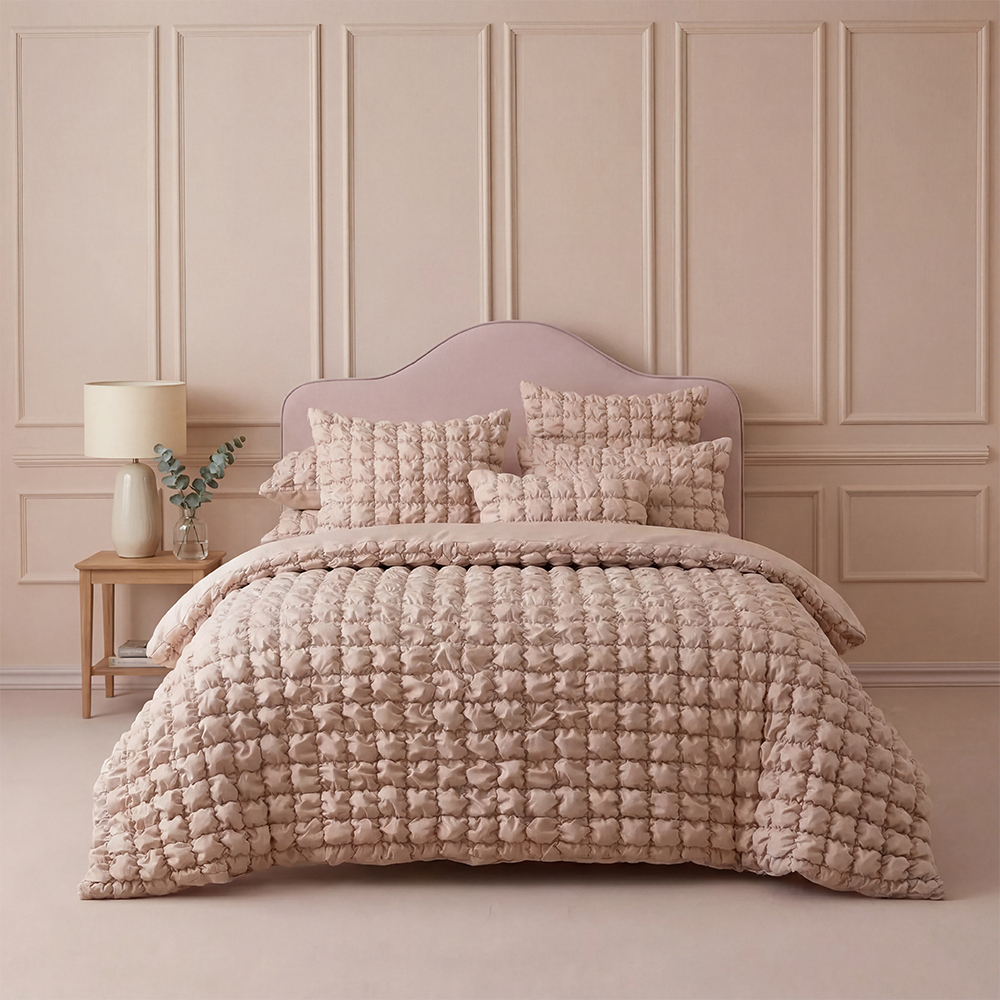
The velvet cushion with pom pom fringe can be positioned as an accent piece within a bedding set display. For example, it can be paired with a quilt or coverlet to add softness and decorative dimension. It can sit in front of a duvet cover to introduce a highlight color or tactile contrast. It can also be combined with a throw blanket to create a complete bedroom styling story.
In living room collections, the cushion can coordinate with throws and curtains. A velvet pillow can soften a sofa display, while a throw adds layered comfort. If the colors are planned carefully, the cushion becomes part of a broader lifestyle scene. This is valuable for retailers because customers often respond to complete room inspiration rather than isolated products.
For private label buyers, coordinated development can help build stronger seasonal collections. A buyer may request cushions in colors that match comforter sets, quilts, or blankets. A supplier with experience across these categories can better understand fabric compatibility, color matching, packaging needs, and production timelines. This integrated capability is a clear advantage over suppliers limited to only one product type.
For hospitality or project customers, coordinated textiles can create a consistent atmosphere across rooms. Cushions may be used as decorative accents on beds or lounge furniture, while bedding and throws provide the main comfort elements. A supplier able to manage multiple textile categories can simplify procurement and help maintain a unified design direction.
Market Appeal for Retailers, Wholesalers, and Interior Buyers
The cushion’s market appeal comes from its combination of accessible size, stylish material, decorative trim, and practical finishing. For retailers, products must be attractive enough to catch attention, but also practical enough to sell consistently. This cushion meets both needs.
In brick-and-mortar stores, the velvet surface invites touch. Customers often make decisions about cushions by feeling the fabric, checking the softness, and imagining the item in their home. The pom pom fringe provides an immediate visual cue that the product is decorative and special. When displayed with bedding or throws, the cushion can help create an inviting area that encourages customers to explore the collection.
In e-commerce, texture and detail are essential for differentiation. Many online cushion listings look similar when viewed as thumbnails. A pom pom edge makes the product more recognizable, while velvet adds a sense of depth in photography. The filled format is also easy to communicate in product descriptions because customers know they are receiving a complete cushion.
For wholesalers, the product’s standard 45 cm size supports broad distribution. It can be sold to home stores, furniture retailers, gift shops, bedding boutiques, online sellers, and interior decor channels. The design is stylish but not overly niche, making it adaptable to different customer groups.
For interior buyers, the cushion offers a quick way to refresh a space. Interior stylists often rely on cushions to adjust color, texture, and mood without changing large furniture pieces. Velvet provides a luxurious touch, while pom pom fringe adds a relaxed and warm personality. This makes the cushion useful for residential projects, showroom staging, photography sets, and boutique accommodation spaces.
Styling Recommendations for Different Interior Themes
The Velvet Cushion Deco Pillow with Pom Pom Ball Fringe can be styled in many ways depending on the desired atmosphere. Its greatest strength is its ability to act either as a soft supporting accessory or as a standout decorative accent.
For a modern minimalist room, use the cushion as a single texture highlight. Place it on a neutral sofa or bed with clean-lined bedding. The velvet surface adds warmth without requiring a busy pattern, while the pom pom fringe prevents the arrangement from feeling too severe. This approach works especially well with beige, cream, gray, taupe, and muted color schemes.
For a romantic bedroom, pair the cushion with layered bedding, a quilted coverlet, and soft throws. The velvet surface contributes a gentle sense of luxury, and the pom pom fringe adds charm. Arranging the cushion in front of larger pillows creates a boutique look that feels curated but comfortable.
For a bohemian interior, mix the cushion with woven textures, tasseled throws, patterned rugs, and natural materials such as rattan or wood. The fringe detail complements handcrafted design elements, while the velvet adds a more polished contrast. This balance of casual and elegant details can make the room feel collected and personal.
For a children’s or teen room, the pom pom fringe brings fun and softness. The cushion can be used on a bed, window seat, or reading chair. Because the design is decorative without relying on cartoon graphics, it can grow with changing tastes and remain useful as the room style matures.
For a boutique hotel or guest room, use the cushion as a front accent on the bed. A single velvet cushion with a decorative edge can make a simple bedding arrangement look more finished. The product can help communicate care and attention to detail, which guests often notice even in small textile touches.
Practical Considerations for Buyers
When evaluating decorative cushions for retail or project use, buyers should consider several practical factors beyond appearance. These include material quality, stitching consistency, filling resilience, packaging, certification awareness, supplier communication, and repeat order capability. The value of a cushion is not only in the first sample but also in the consistency of bulk production.
Material quality affects both customer satisfaction and product reviews. Velvet should feel soft and appear visually consistent. If the fabric has obvious flaws or poor hand feel, the decorative concept will not be enough to satisfy customers. The product’s velvet construction gives it a premium foundation, while supplier inspection helps manage consistency.
Stitching and trim attachment are especially important for this product because the pom pom fringe is a visible feature. Buyers should look for even seams, secure trim, and clean corners. A supplier experienced in textile production can better manage these requirements during bulk production.
Filling affects display quality. Cushions should look full in product photos, on store shelves, and in customer homes. A flat cushion can appear low value even if the fabric is attractive. A filled cushion supplied in the correct shape offers convenience and stronger presentation.
Packaging matters for international shipping. Velvet cushions must be protected from dirt, excessive compression, and careless handling. Export experience helps the supplier choose suitable packing methods and carton arrangements. This reduces the risk of receiving products that require extra handling before sale.
Supplier capability is also important. A company with a broad home textile product range, design team, quality supervision, and certification awareness can support long-term business better than a supplier that only offers isolated items. Buyers seeking seasonal development, private label programs, or coordinated bedding and cushion ranges can benefit from working with a more complete textile partner.
Sustainability and Conscious Practice in Home Textiles
Sustainability has become an increasingly important topic in home textiles. Consumers, retailers, and importers are paying more attention to material safety, responsible production, waste reduction, and environmental impact. While decorative cushions are small products, they are still part of a larger textile supply chain, and responsible manufacturing practices matter.
The company behind this cushion is committed to sustainable development by reducing energy consumption and waste while prioritizing eco-friendly materials and dyes. Such practices support a more conscious approach to textile production. Reducing waste can include more efficient cutting plans, better quality control to prevent defective output, and improved production planning. Reducing energy consumption may involve better factory management and process optimization.
OEKO-TEX Standard 100 certification awareness is also relevant because it reflects concern for textile safety. For buyers selling into markets with strict consumer expectations, certification can help support product credibility. Although decorative cushions are not worn as garments, they are still touched frequently and used close to the body in living rooms and bedrooms. Textile safety therefore remains important.
Conscious practice also includes product durability and timelessness. A cushion that is well made and stylistically versatile may remain in use longer than a low-quality trend item that is quickly discarded. The velvet surface, standard size, and decorative but not overly narrow fringe detail help the product maintain appeal over time. Longer product life can contribute to more responsible consumption.
For business buyers, sustainability is not only an ethical concern but also a market advantage. Retailers increasingly need products that align with customer values. Suppliers who understand eco-conscious expectations can help buyers communicate quality, care, and responsibility more effectively.
Q&A: Common Questions About the Velvet Cushion Deco Pillow
What is the size of the cushion?
The cushion measures 45 cm by 45 cm. This square size is widely used for sofa cushions, bed cushions, accent chairs, and layered decorative arrangements.
What material is used for the cushion?
The cushion is made from velvet, giving it a soft hand feel, rich visual depth, and a luxurious decorative appearance.
What makes this cushion different from basic decorative pillows?
The product combines a velvet surface, pom pom ball fringe, filled cushion construction, and an invisible zipper. This combination creates stronger texture, better convenience, and a more refined appearance than many plain cushion covers or basic pillows.
Can the cushion be used on both beds and sofas?
Yes. The cushion is designed to be suitable for both bed and sofa styling. It can also be used on armchairs, benches, reading corners, guest room furniture, and interior display settings.
Why is the pom pom ball fringe important?
The pom pom fringe adds a decorative border and playful texture. It helps the cushion stand out visually and gives it a softer, more charming personality.
What is the benefit of an invisible zipper?
An invisible zipper keeps the cushion looking neat and refined. It avoids the distraction of a visible closure and supports practical handling of the cushion cover.
Is this product suitable for retail and wholesale programs?
Yes. Its popular size, soft velvet material, distinctive fringe detail, and complete filled format make it suitable for retail stores, online sellers, wholesalers, interior buyers, and coordinated home textile collections.
How does the manufacturer support quality?
The production process is supervised from raw material inspection to final packaging. Attention is given to fabric quality, trim consistency, sewing, filling, finishing, zipper function, and packaging.
Can the cushion be coordinated with other home textile products?
Yes. Because the supplier has experience in duvet covers, quilt covers, comforters, quilts, bedcovers, curtains, cushions, throws, and blankets, the cushion can be developed as part of broader coordinated textile collections.
Why is velvet a good choice for decorative cushions?
Velvet offers softness, color richness, and an elevated appearance. It catches light beautifully and adds warmth and comfort to both bedrooms and living rooms.
Conclusion: A Decorative Cushion with Style, Comfort, and Manufacturing Confidence
The Velvet Cushion Deco Pillow with Pom Pom Ball Fringe is a strong example of how thoughtful textile design can turn a small home accessory into an important styling element. Its velvet surface provides softness and visual richness, while the pom pom fringe adds playful charm and a distinctive decorative edge. The 45 cm by 45 cm size makes it practical for a wide range of interiors, and the filled cushion format gives buyers and end users a ready-to-use product.
Its advantages over common competitor products are clear. It offers more texture than plain cushions, more convenience than cover-only options, a cleaner appearance than exposed zipper designs, and stronger styling flexibility than overly narrow trend items. The combination of material, trim, closure, and format creates a product that is visually appealing, commercially useful, and suitable for many home textile channels.
Equally important is the manufacturing strength behind the product. Supported by a professional home textile export company with experience across bedding, cushions, throws, blankets, curtains, and related categories, the cushion benefits from design development, raw material inspection, production supervision, quality control, and export packaging knowledge. The company’s commitment to integrity, design excellence, superior quality, expert knowledge, and conscious practice adds further value for buyers seeking reliable long-term cooperation.
In a market where customers increasingly look for comfort, beauty, safety, and personality in their homes, this velvet cushion offers a balanced answer. It is soft but stylish, decorative but practical, playful but refined, and simple enough to coordinate with many room settings. For retailers, wholesalers, designers, and importers, it represents a versatile product with strong visual appeal and dependable production support.
References
1. Kadolph, S. J. Textiles. Pearson Education.
2. Tortora, P. G., and Merkel, R. S. Fairchild’s Dictionary of Textiles. Fairchild Books.
3. Saville, B. P. Physical Testing of Textiles. Woodhead Publishing.
4. Joseph, M. L. Introductory Textile Science. Holt, Rinehart and Winston.
5. OEKO-TEX Association. Standard 100 by OEKO-TEX: General Information and Textile Safety Principles.
6. Gordon, B. The Textile Reader. Berg Publishers.
Product: Velvet cushion deco pillow with pom pom ball fringe

- QUICK LINKS
- Company
- Customize
- Sustainable
- Download
- Contact Us
- GET IN TOUCH
-
- [email protected]
[email protected] - +86-13777321650
- +86-571-87247829
- Room 703, Building 2, No. 498 Fengqing Road, Gongshu District, Hangzhou City, Zhejiang Province, China
- [email protected]
- WHAT’S NEWS
- Corporate News
- Industry News